
DomiNations
Big Huge Games.Strategy
4.336.51K Reviews
- Version
- 13.1590.1591
- Installs
- 10.00M
- Age Rating
- Everyone 10+
Screenshots
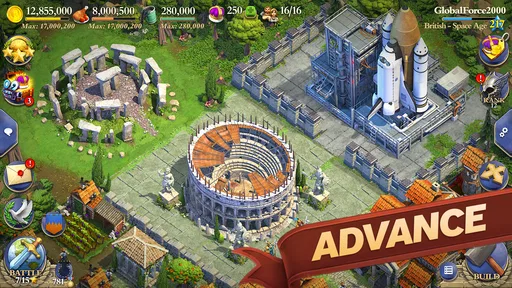

Our Review of DomiNations
 Analysis by Appyee
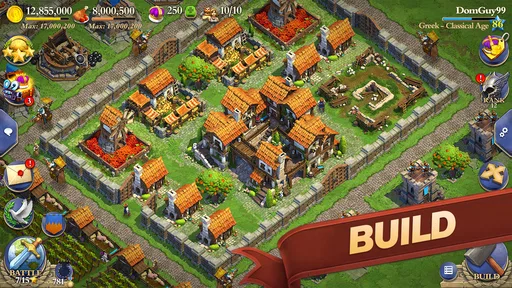
I spent time with DomiNations as a mobile strategy game, and my first impression was that it asks for more patience than many quick battlefield games. You are not simply choosing an army and rushing into the next match. You are building a settlement, improving its defenses, developing troops, and making decisions that matter over a longer stretch of play. That slower rhythm is exactly what makes it appealing to me, although it also explains why some players may lose interest.
Developed by Big Huge Games, the game puts empire building and warfare in the same loop. You begin with a modest base and gradually guide it through historical ages, collecting resources, placing buildings, researching improvements, and preparing forces for attacks. The free entry point makes it easy to try, while optional purchases range from $0.99 to $199.99 per item, so anyone who enjoys it should understand that the progression can include spending pressure.
How the everyday empire-building loop works
My normal session starts by checking what has finished while I was away. I look at construction, research, troop training, and resource storage before launching an attack. This simple order matters because it prevents me from spending materials blindly. If a major upgrade is close to completion, I may postpone a costly purchase or battle and use the waiting time to plan the next sequence instead.
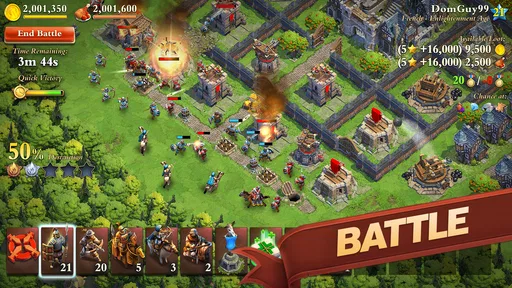
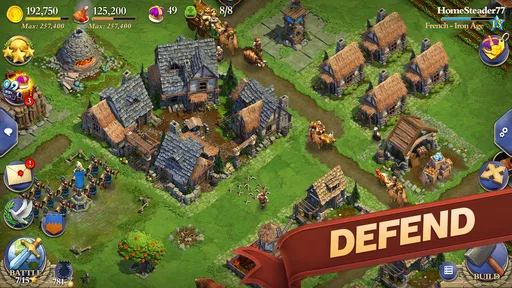
The central appeal is the connection between peaceful development and combat. Buildings are not just decoration: they support the economy, unlock improvements, protect valuable resources, or strengthen the army. An attack can bring useful returns, but it can also expose weaknesses in the base and consume troops that take time to replace. I found that the best progress came from treating every battle as part of a larger schedule rather than as an isolated win-or-lose moment.
That makes the game especially suitable for players who enjoy gradual improvement. I can make meaningful progress in a short visit by collecting resources and starting an upgrade, then return later for a longer attack session. It works well around a daily routine: a quick check during a break, a few minutes in the evening to queue tasks, and a more deliberate session when I have enough time to study an opponent.
The historical-age structure gives the long campaign a sense of direction. Advancing is not merely about making numbers larger; it changes what I can build and how I think about defense and offense. Reaching a new stage can make earlier habits feel inadequate, which is useful because it keeps the settlement from becoming completely solved. At the same time, progress can feel slow when several important improvements compete for the same resources.
What I check before spending resources
I learned to avoid treating every available upgrade as equally urgent. A stronger-looking building is not automatically the best next choice. I first consider whether it will improve my immediate ability to protect resources, support attacks, or unlock a broader improvement path. This habit is more valuable than simply tapping the first highlighted option.
Storage is another practical concern. When resources are close to their limits, collecting rewards or winning another battle may produce less value than expected. I try to create a spending plan before a long play session: identify the next meaningful upgrade, estimate what it requires, and then decide whether an attack is worth the risk. This reduces the frustrating feeling of earning materials without having a clear place to use them.
Troop preparation deserves the same attention. I prefer to train a reliable force before experimenting with a new composition. Testing is worthwhile, but doing it immediately before an important attack can leave the settlement without a dependable response. Keeping a familiar setup as my baseline gives me a way to measure whether a new approach is genuinely better.
Settings and controls worth checking early
I recommend looking through the available settings before settling into the campaign. Sound and music controls are worth adjusting because the game can be played in short public sessions, and the right audio level makes repeated visits less tiring. I also prefer to review notification behavior so reminders support my routine rather than interrupting it constantly.
Account and connection choices deserve attention as well. Strategy games built around long upgrades are more enjoyable when progress is handled consistently, so I would not casually switch between devices without first checking how the game manages the account. A few minutes spent understanding the sign-in and save process can prevent unnecessary anxiety later, particularly if you intend to keep the same empire for months.
On a smaller screen, I found that careful tapping is more important than speed. Placing buildings or selecting units while rushing can create mistakes, especially when several elements are close together. I use a slower pace during base design and reserve faster gestures for familiar battle actions. This is not a flashy shortcut, but it makes the interface feel more dependable.
Notifications are most useful when they match a plan. If every completed timer generates an interruption, I tend to open the game without a real objective and spend resources impulsively. I get more value by checking at chosen times and using notifications as reminders rather than commands. That approach also helps keep the game from taking over the day.
Repeatable patterns that make progress smoother
Experienced play is less about finding one perfect army and more about repeating a sensible cycle. I collect what is ready, inspect the next upgrade, train what I need, review the base, and only then choose a battle. Following the same order reduces wasted actions and makes it easier to notice when a problem comes from the economy, the defense layout, or the army itself.
Before attacking, I study the target instead of dropping units immediately. I look for exposed routes, defensive concentrations, and the buildings that appear to matter most to the objective. Even without relying on a complicated formula, this pause improves results. A battle often goes wrong because the opening is rushed, not because the player lacks a powerful unit.
I also recommend separating experimentation from resource recovery. When I am trying a different troop mix or attack route, I choose a battle where a poor result will not ruin the entire upgrade plan. Once I understand the pattern, I use the dependable setup for more important fights. This creates a practical balance between learning and protecting progress.
Base layout benefits from the same mindset. I do not move everything whenever I lose once. Instead, I identify the specific weakness: an important building too close to an edge, a defensive gap, or a resource arrangement that makes the settlement easy to approach. Changing one area at a time makes the result easier to judge. Constant redesign can be entertaining, but it also makes it difficult to know which change helped.
Another useful habit is keeping a small mental queue of priorities. I decide what I want to improve next before resources arrive, then reconsider only when a new age, battle result, or defensive weakness changes the situation. This prevents the common mobile-game trap of spending simply because something is available. In my experience, disciplined waiting is one of the strongest advantages a patient player can create.
Where the strategy becomes more demanding
As the settlement grows, the number of competing decisions increases. A player may want stronger troops, a better economy, improved defenses, and a new building at the same time. The game does not remove that tension; it makes prioritization more important. I enjoy this because it gives the campaign a real planning layer, but it can feel restrictive if you prefer constant action.
The free-to-play structure is the clearest limitation. Optional purchases may shorten waiting or help maintain momentum, but the listed range reaches as high as $199.99 for an individual item. I would approach the game with a personal spending limit before buying anything. The most satisfying progress, for me, comes from making a plan with the resources earned through play rather than trying to remove every delay.
There is also a psychological cost to long timers. When an important improvement is running, the best action may simply be to wait and prepare for what comes next. Players who want every session to deliver immediate combat may find that unsatisfying. In contrast, people who enjoy checking a developing project and returning to see the result will probably find the slower structure rewarding.
Another trade-off is that mistakes can have a delayed effect. A poor upgrade choice or neglected defense may not feel serious at first, but later it can make attacks less comfortable or leave the base vulnerable. I found it helpful to review decisions after a few sessions instead of judging them instantly. If the same problem keeps appearing, that is a stronger signal than one unlucky battle.
The age rating is Everyone 10+, which makes the game approachable for a broad audience, but younger players may still need guidance around optional spending and the habit of returning to timers. The game is free to download, yet “free” should not be confused with completely pressure-free. Families should discuss purchases in advance, while adult players should decide whether the long-term loop fits their budget and attention.
How it compares with faster strategy alternatives
Compared with a short-session tactical game, DomiNations gives more weight to the settlement between battles. A quick tactics title may deliver a complete match in one sitting, while this game asks me to think about what that match does for the next upgrade and the next stage of the empire. If I want immediate, self-contained challenges, another strategy game may suit me better.
Compared with a purely decorative city builder, it provides a clearer military purpose. The base is not only about appearance or production; it supports attacks and must withstand pressure. That combination gives construction decisions more consequence, although it also means I cannot ignore combat for long without affecting the wider campaign.
It also differs from games built around constant real-time control. I am not managing every second of a long competitive match in the same way. Much of the strategy happens before the battle: choosing priorities, preparing forces, arranging the settlement, and deciding when to commit. That makes it more comfortable for players who like planning but less attractive to those who want highly reactive action.
The game has a substantial audience, with an average rating of 4.3 from around 817 thousand ratings and over 10 million installs. Those figures suggest broad appeal, but they do not remove the need to match the design to your habits. Popularity cannot make long waits enjoyable for someone who dislikes them, and it cannot turn optional purchases into a non-issue for a player who wants a completely frictionless free experience.
Who will enjoy it, and who should pass
I would recommend it to someone who likes watching a project develop over time, making decisions with limited resources, and improving a base through repeated adjustments. It is particularly good for players who enjoy having a routine: check the settlement, prepare an army, choose a sensible target, and return later to continue the plan.
I would be more cautious recommending it to a player who wants a complete experience in every short session. The game can provide quick tasks, but its larger rewards come from continuity. It is also not my first choice for anyone who dislikes in-app purchase prompts, timer-based progression, or the responsibility of protecting a long-term save.
The current version is 13.1590.1591, and the minimum requirement is Android 7.0. That makes it accessible on a range of older Android devices, although the experience will naturally depend on the phone’s overall performance and available storage. I would still keep the system updated and leave enough space for the game to run comfortably rather than judging it from a crowded device.
One practical question is whether a new player must understand every system immediately. I do not think so. The early campaign is manageable if you focus on one improvement goal at a time and resist spending resources just to clear every available prompt. Learn the relationship between economy, defenses, and troops first; deeper optimization can come later.
Another question is whether playing without purchases is realistic. In my experience, it is possible to enjoy the core loop without paying, but patience becomes part of the strategy. You need to accept slower scheduling and avoid treating every delay as a problem that must be solved with money. If that sounds irritating rather than satisfying, a premium strategy game may be a better fit.
My verdict after settling into the routine
DomiNations works because its parts reinforce one another. Building the settlement gives battles a purpose, battles feed future improvements, and each new stage asks me to rethink habits that once worked. I like that the game rewards preparation more than frantic tapping, and I appreciate being able to make progress through short checks as well as longer sessions.
Its weaknesses are equally clear. The waiting structure can slow the pace, the number of competing upgrades can overwhelm newcomers, and the broad in-app purchase range means players should set boundaries early. The game is not a good match for someone seeking nonstop action or a fully predictable free progression path.
For me, the best way to play is to treat the empire as a scheduled project. I check settings and notifications once, establish a repeatable resource-and-army routine, study battles before committing, and change the base only when I can identify a real weakness. That approach makes the slower design feel intentional instead of inconvenient.
With a 4.3 average and a free price, it is easy to try, and the Everyone 10+ rating keeps the presentation broadly approachable. I would recommend giving it a fair test over several sessions rather than judging it after one battle. If you enjoy patient planning and the satisfaction of returning to a stronger settlement, this strategy game has enough depth to become a regular part of your routine. If you want instant matches, minimal timers, or no spending pressure, I would choose a different kind of strategy game instead.
Verdict
Strengths of DomiNations
- Deep historical progression from ancient tribes to modern nations.
- Large variety of buildings, troops, technologies, and strategic upgrades.
- Single-player campaigns add context and objectives beyond regular battles.
- Alliance events and wars provide rewarding long-term multiplayer goals.
- Resource management and base design offer plenty of strategic flexibility.
Limitations of DomiNations
- Progress can become slow without frequent play or premium resources.
- Raids may feel frustrating when stronger opponents attack your settlement.
- The interface can feel crowded on smaller phone screens.
- Many upgrades require long timers that limit short play sessions.
- Some advanced features are locked behind substantial progression.
Similar Picks in This Category
View All
Clash of Clans
Supercell4.5

Plants vs. Zombies™
ELECTRONIC ARTS3.7

Lords Mobile: Kingdom Wars
IGG.COM4.5

Clash Royale
Supercell4.4

State.io — Conquer the World
CASUAL AZUR GAMES4.1

Car Driving School : Car Games
Spark Game Studios3.9
Frequently Asked Questions
What is DomiNations and how does the gameplay work?
DomiNations is a strategy game in which you guide a civilization from the Stone Age into the Space Age. You gather resources, research technologies, build and upgrade structures, train armies, and expand your territory. Progress depends on balancing economic development with military strength, while completing campaigns, participating in events, and competing against other players in battles and alliances.
Can DomiNations be played offline?
DomiNations is primarily an online game and requires an internet connection for most important features. An active connection is needed to synchronize your progress, access multiplayer battles, communicate with alliance members, receive events, and use the game’s servers. You may be able to open portions of the app briefly without a connection, but offline play is not its intended experience.
Is DomiNations free to download and play?
Yes, DomiNations can be downloaded and played for free on supported Android and iOS devices. However, it includes optional in-app purchases for premium currency, resource bundles, boosts, and other items that can speed up construction or research. You can progress without spending money, although advancement may take longer and careful resource management becomes more important.
Does DomiNations include multiplayer battles or alliances?
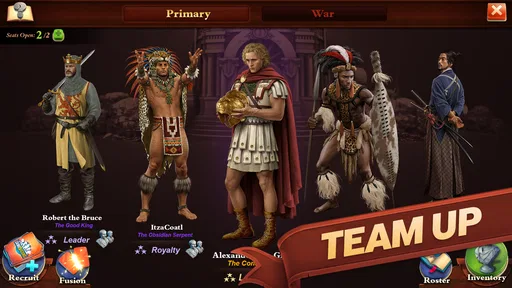
Yes, multiplayer is a major part of DomiNations. You can join or create an alliance, communicate with other players, request support, and participate in cooperative activities. Depending on your progression, you can also take part in competitive battles and larger alliance-based events. Multiplayer content adds variety, but it may require regular activity and a developed civilization.
What device requirements and account features should I know about before installing?
DomiNations needs a reasonably modern Android or iOS device with enough free storage for the initial installation and later updates. Performance can vary on older phones, especially during large battles or when many buildings are displayed. Because progress is server-based, linking the game to an available platform account or supported login option is recommended to help protect your civilization if you change or reset devices.
Play our best games!


